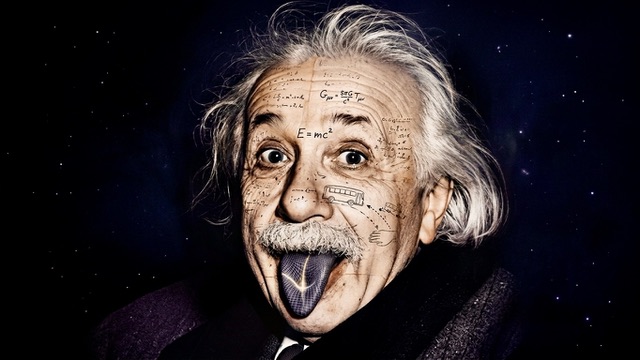
Einstein referred to his thought experiments as "Gedankenexperiment" -- literally meaning an experiment conducted entirely in your mind, requiring no laboratory.
As a child, my understanding of Einstein was limited to "the man who wrote E=mc²" and "genius." Only upon reading about relativity did I realize Einstein was relatable. Observing how a bus moving forward appears to move backward when observed from another bus sparked the realization that Einstein too questioned common sense observations.
This childhood irritation reveals something profound: the mind constructs models of how reality should work, and when reality violates these expectations, that gap becomes a space for original thinking. Most people patch this gap and move on; a few stare at it until it reveals something new.
Intelligence and Conditions
Measuring intelligence through problem-solving capacity misses the mark. Instead, metacognition -- thinking about one's own thinking -- better predicts creative achievement than raw IQ alone. However, intelligence requires proper conditions: freedom from distraction, education, and societal support.
Einstein benefited from stretches of genuine solitude at the patent office in Bern, hours of uninterrupted thinking that biographer Walter Isaacson credits as essential to his 1905 breakthroughs.
Psychologist Mihaly Csikszentmihalyi's research on creative individuals revealed that what separated them wasn't intelligence or privilege alone, but intrinsic motivation combined with a prepared environment. Talent is almost table stakes; the rarer ingredient is the surrounding constellation of conditions.
Curiosity Over Formalism
I experienced sadness upon realizing my incomplete understanding of relativity, recognizing that pressure to be rigorous often revokes permission to wonder. Yet curiosity precedes formalism, always. Questions existed before equations.
The real distinction lies in intrinsic versus extrinsic motivation. Research in self-determination theory shows people pursuing creative work for internal reasons -- curiosity and understanding -- consistently outperform those seeking rewards or recognition. Einstein embodied this pathologically during his formative years.
The Structure of Curiosity
Using neuroscience as an example: visual perception involves over thirty specialized brain regions that independently process different elements before being stitched together. Similarly, curiosity isn't a single faculty but a binding process: sensation, pattern recognition, discomfort at inconsistency, and refusal to accept incomplete pictures.
My childhood observation about light bending on my hand -- implying light relates to space -- wasn't wrong or incomplete, but rather pointed precisely at something real, something that took the rest of science centuries to formalise.
Neuroscientist Antonio Damasio notes that emotion and curiosity are not the enemy of rational thought but its engine. Einstein's thought experiments were structured daydreams, not outputs of rigorous training, but results of asking why past the point most people stop.
Rather than asking what great thinkers achieved, consider how they achieved it. While not everyone possesses exceptional IQ, everyone can develop curiosity about their own curiosity -- a far more challenging but rewarding pursuit than attempting to match Einstein's intellect.