Technical
Blogs
Things I had to understand from the ground up, written down while learning them. Notebooks follow a subject day by day; essays make one argument.
Why I write these
I write these to check whether I actually understand something. If I can explain it from the start, with the reasoning and not just the result, I do. If I can't, the gap shows up on the page.
I'm mostly self-taught, so I don't always know what I'm missing. Writing is how I find out.
I move between subjects because that's how my curiosity works, and because an idea often makes more sense once I've seen it somewhere else.
These are working notes, not tutorials. Some of it will be wrong. Where I'm not sure, I say so.
Vision
Recovering structure from projections. An image discards depth, so every estimate of shape, motion and identity is an inference under geometric and statistical constraints.
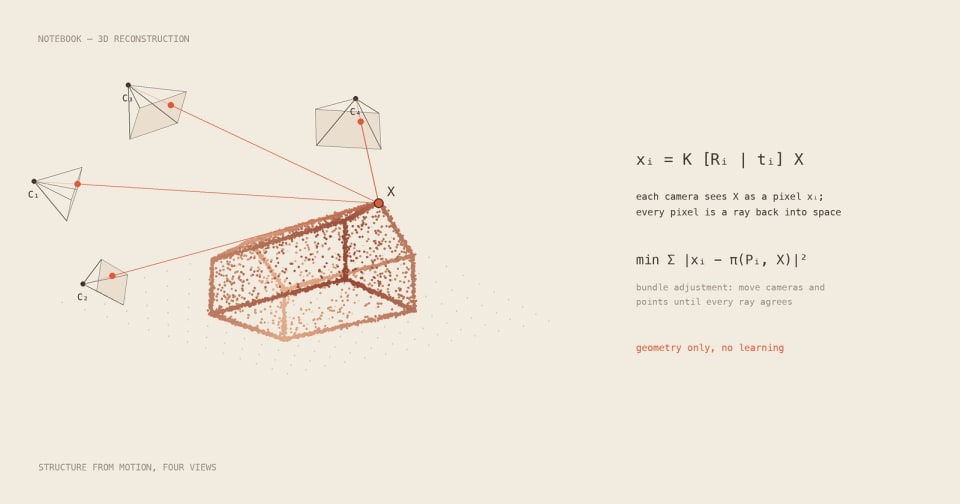
Fig. 1.1 Notebook · 3 days · 17.4k words · ongoing
Structure from Motion
Geometry-based 3D reconstruction from images: camera models, epipolar geometry, triangulation and structure from motion.
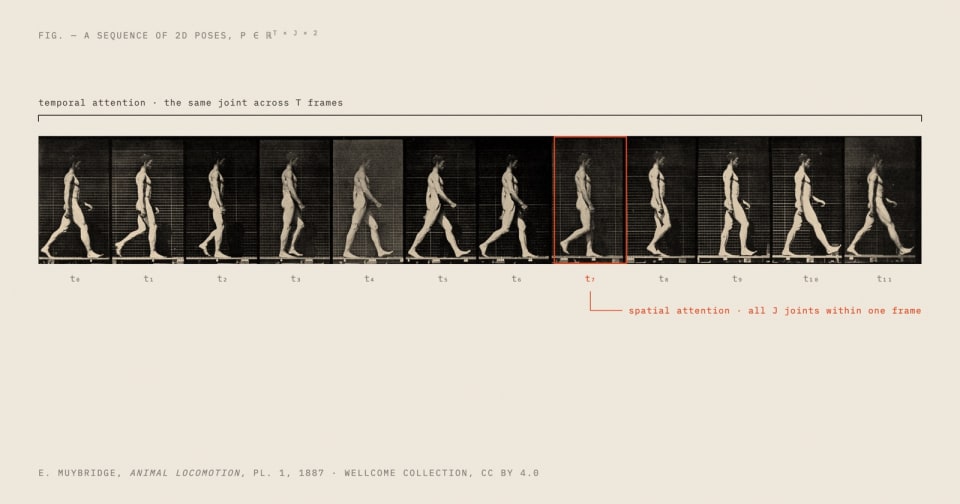
Fig. 1.2 Essay · Feb 2026 · 5 min
Temporal and Spatial Attention for 3D Pose Estimation
How temporal and spatial attention mechanisms enable accurate 2D-to-3D human pose estimation, with a deep dive into DSTformer.

Fig. 1.3 Essay · Mar 2024 · 3 min
Building a Sign Language Recognition System with CNNs and OpenCV
A practical walkthrough of building a real-time ASL alphabet recogniser. Dataset, CNN architecture with the actual math, and live webcam inference using OpenCV.
Neuroscience
Computation in biological hardware: spiking neurons, hierarchies of receptive fields and dense feedback, doing inference on roughly twenty watts.

Fig. 2.1 Notebook · 7 days · 9.8k words
Understanding Emotion
What are emotions, really? The neuroscience of feeling, and why an autistic brain might process them differently.
- 01What even is an emotion?3 min
- 02Are guilt and love just layered explanations?3 min
- 03Why did evolution bother building emotions?5 min
- 04Guilt, cheating, and why monogamy won10 min
- 05What is happiness and where does emotional pressure go?7 min
- 06Beyond language: the other tools that shape how we feel6 min
- 07How emotions control what you think, who you trust, and what you remember11 min
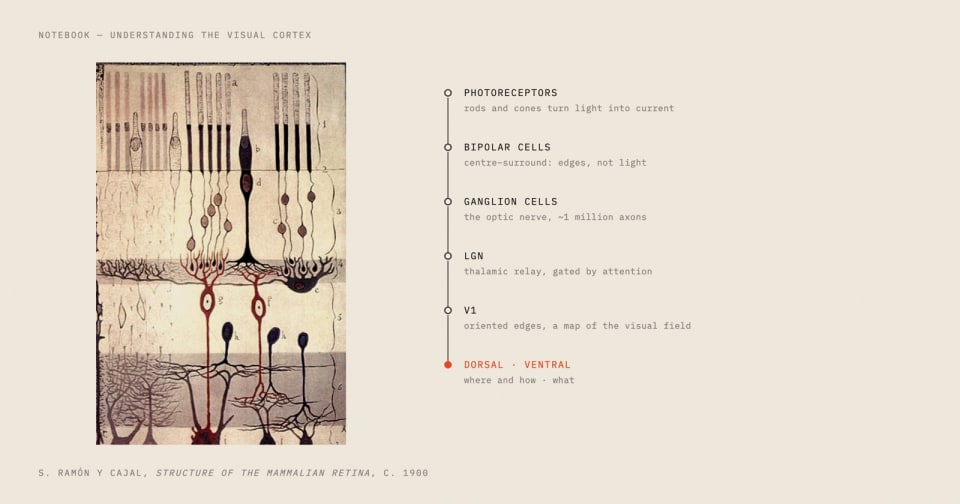
Fig. 2.2 Notebook · 7 days · 5.8k words
Understanding the Visual Cortex
How does the brain process what the eye sees? Tracing the path from retina through two parallel streams, the mechanisms at each stage, and the computations behind perception.
- 01How does the brain begin processing vision?2 min
- 02What mechanisms power each visual stream?2 min
- 03How do neurons detect and assemble edges?2 min
- 04How do neurons use context from their neighbours?2 min
- 05How does the brain perceive depth?6 min
- 06How does seeing become knowing?5 min
- 07The complete architecture — how vision flows through the brain9 min
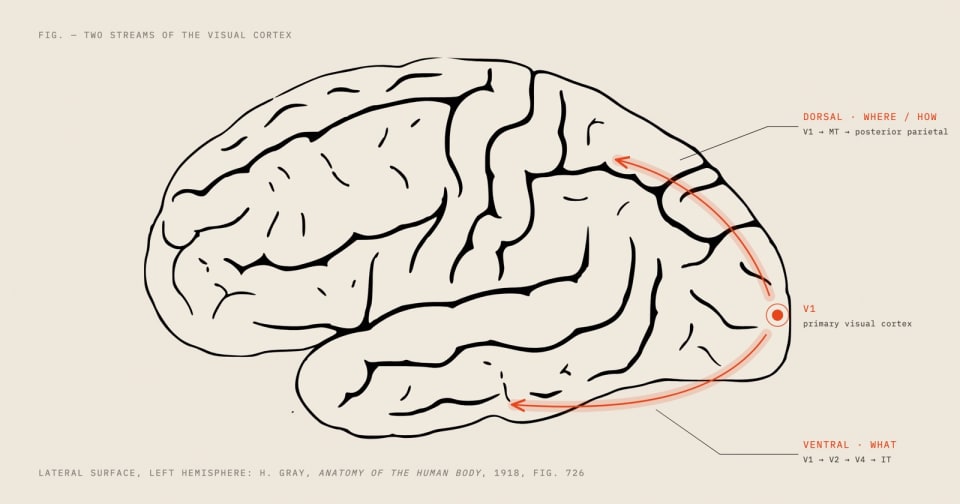
Fig. 2.3 Essay · Apr 2026 · 14 min
The Visual Cortex as a Computer Vision Architecture: Dorsal and Ventral Streams
How the brain's visual cortex uses two parallel streams, feedback loops, and relative perception to process vision. Everything rewritten for engineers who build vision systems.
Machine learning
Function approximation at scale. Parameterised models fitted by gradient descent, where the architecture decides what can be represented and the data decides what is learned.
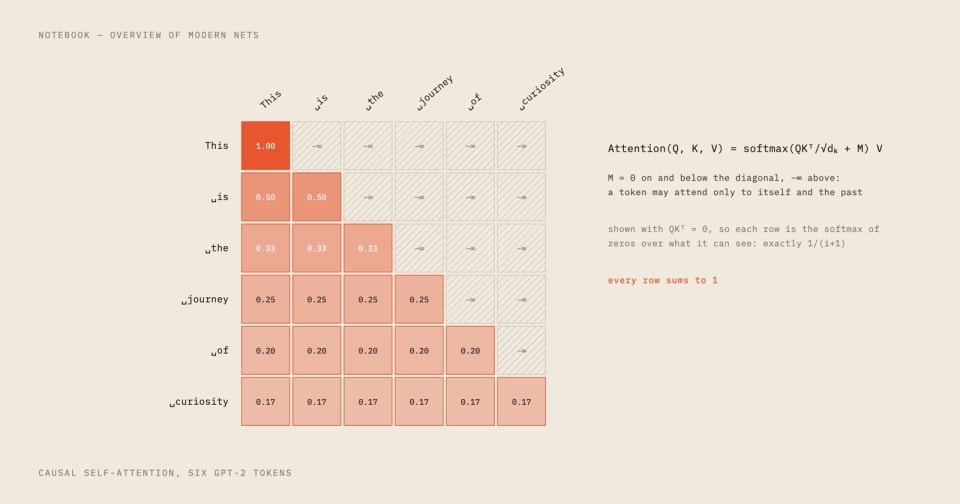
Fig. 3.1 Notebook · 7 days · 3.2k words
Overview of Modern Nets
Revisiting transformers, tokenizers, attention, and the GPT family. Intuitive understanding for interviews and curiosity.
- 01The encoder block, BPE, and how tokens are made2 min
- 02Multi-head attention and why we use dot products2 min
- 03Masking, padding, and BERT vs GPT2 min
- 04The transformer architecture, drawn from scratch2 min
- 05Pretraining, feedforward, residual connections, and layer norm3 min
- 06LLaMA, Mistral, and the road to reasoning models2 min
- 07RAG, LangChain, LangGraph, and the LLM tooling landscape5 min

Fig. 3.2 Notebook · 4 days · 1.9k words
Search Images with Words
From neuroscience to CLIP to building a working on-device search prototype. How do VLMs bind words to pixels?
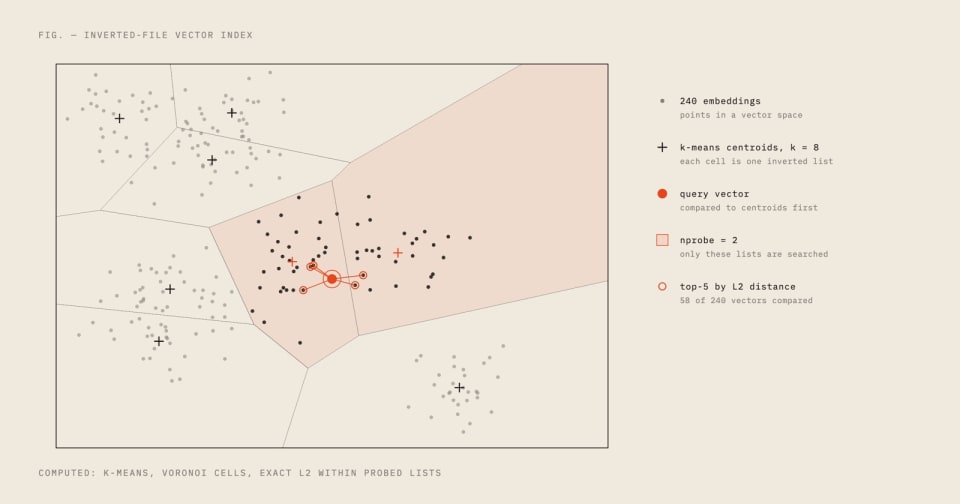
Fig. 3.3 Essay · Jan 2024 · 6 min
Vector Database Management Systems: Architecture and Internals
A technical overview of how Vector Database Management Systems work, covering vectorization, indexing, hardware tradeoffs, and the core challenges in building systems that search by meaning rather than exact match.
Foundations
Probability, estimation and evaluation: the formal machinery for reasoning under uncertainty, and for deciding whether a model's output can be trusted.
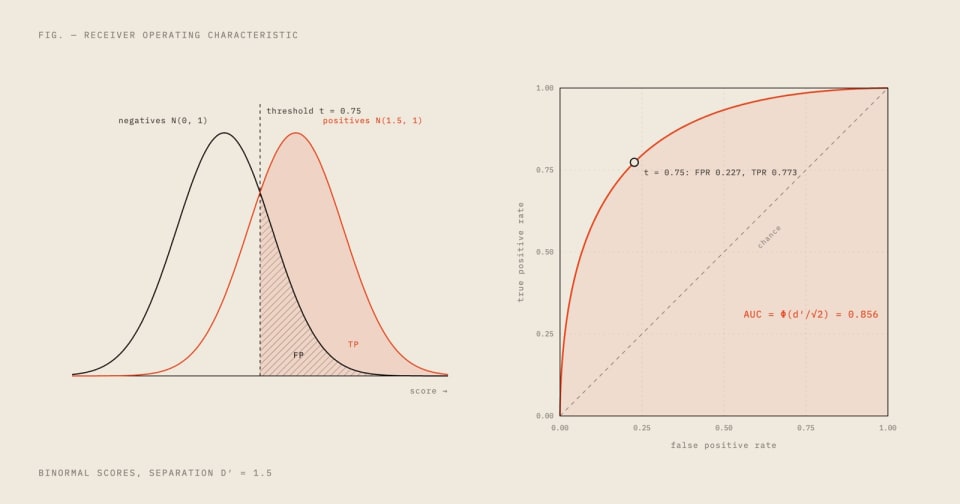
Fig. 4.1 Essay · Feb 2024 · 3 min
ROC Curves and AUC: Picking the Right Threshold for Your Model
Why accuracy fails on skewed data, how confusion matrices work, and how to use ROC curves and AUC to evaluate and compare probabilistic classifiers.
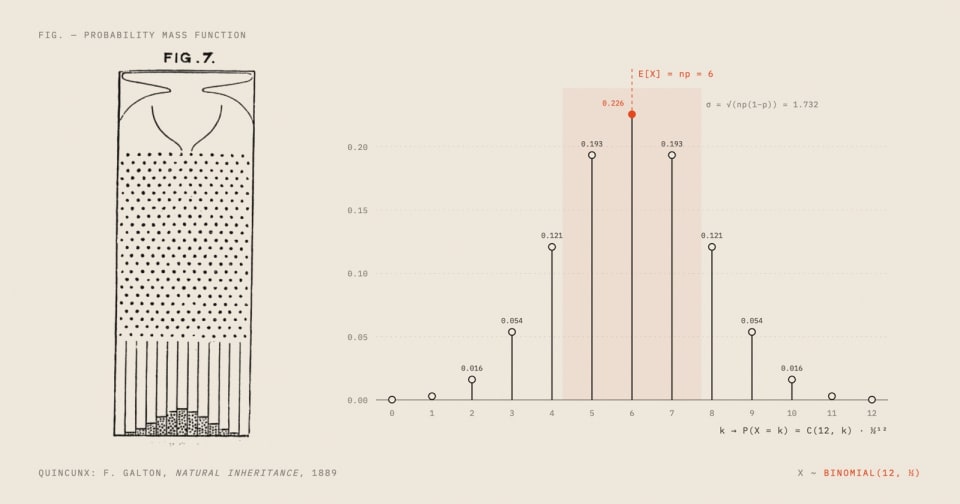
Fig. 4.2 Essay · Nov 2023 · 4 min
Probability Mass Functions, Expectation, and Variance
Relearning probability from a machine learning perspective. What PMFs are, how to compute expectation and variance from first principles, and why any of this matters for ML.
Nothing written on that yet.