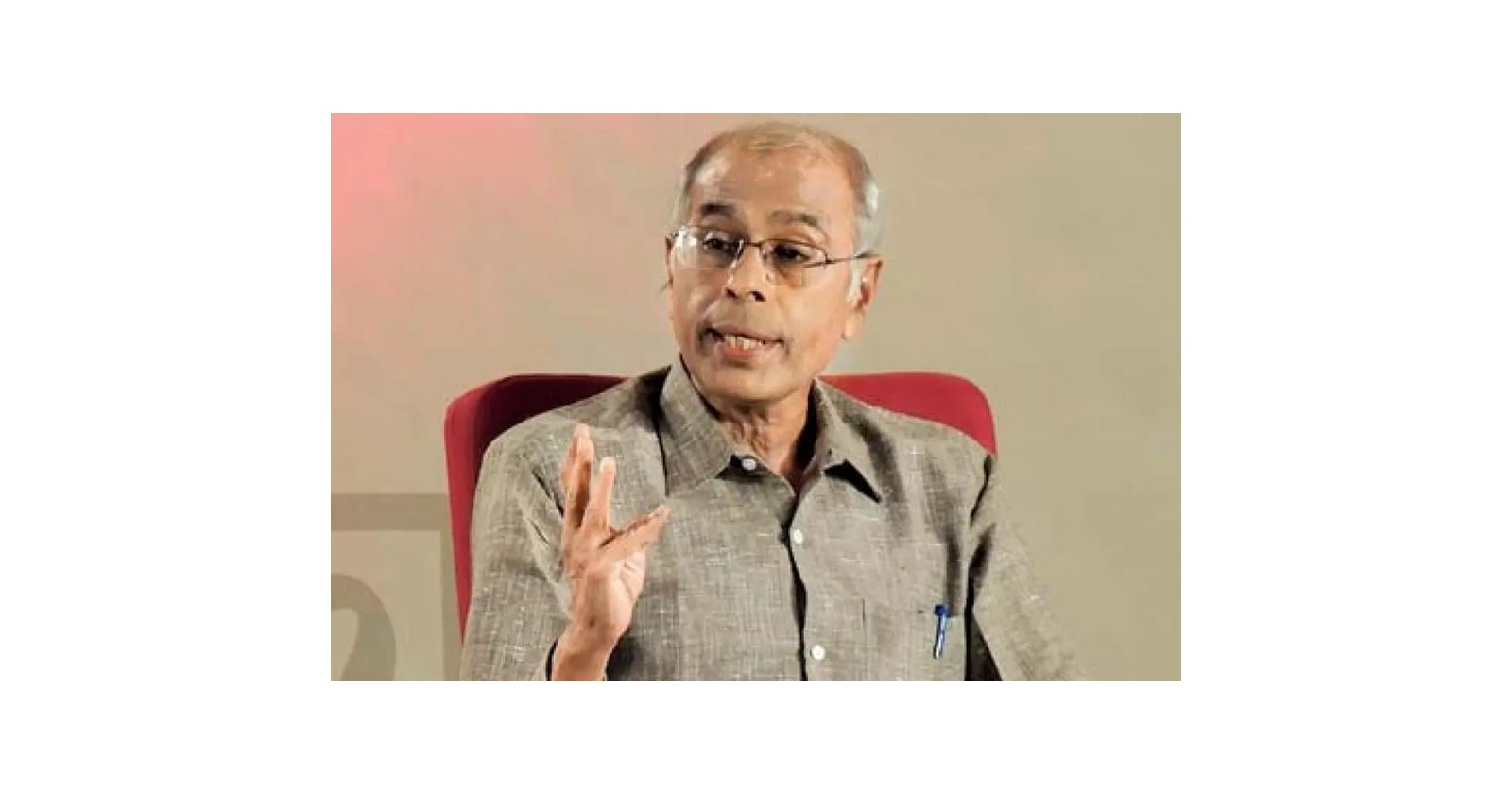
I completed my MBBS in 1970. Until 1982, I ran two clinics and also managed a hospital. In 1982, I shut down both my clinics and closed the hospital as well. Since then, I have been a full-time worker of the Anti-Superstition Movement.
When I shut down my full-time, well-running medical practice and became a full-time activist, there was one question people asked me then—and still ask me even today: “Doctor, is it really necessary to shut down a successful business in order to work against superstition?” My answer is: yes, it is necessary.
Why is it necessary? Understand this: if you light a candle in a dark hall, there is some light. If instead of a candle you light a petromax, there is more light. If instead of a petromax you light a tube-light, there is even more light. And if day breaks, the sun rises overhead, and sunlight enters from all directions, then darkness disappears completely. As light increases, darkness recedes.
Similarly, in human life, as the light of education and science spreads, ignorance and superstition should disappear. According to this way of thinking, nothing extra needs to be done. If this were truly the case, I would have been the happiest person. But what is the reality? I will give you just two examples so that the reality becomes clear.
The train, the lemons and the chillies
In 1853, India’s first railway train ran from Mumbai to Thane. Until then, people in this country had never imagined that a vehicle could carry hundreds of people from one place to another without animals like horses, elephants, or oxen. At that time, schoolchildren recited poems like:
The sahib’s child is extremely clever,
How did he drive a cart without oxen?
In those days, travelling from Thane to Mumbai by bullock cart took a full 24 hours. Compared to this, the railway was an extremely important and useful facility. At that time, there were no tickets for the train. In fact, to persuade people to board it, the British officers used to pay people one rupee to sit inside.
Why? Because people were not ready to get into the train. They believed the train was some kind of witchcraft. Fatwas were issued saying:
To encourage travel, one rupee was given to passengers—an amount that was significant at that time. Gradually, it was reduced to eight annas, then four annas. Later travel was made free, and eventually tickets were introduced.
But because the train was seen as something magical, whenever it departed—from Mumbai to Thane or from Thane to Mumbai—married women would come, perform rituals, apply turmeric and vermilion to the engine, and tie lemons, chillies, and inverted black dolls to it.
Whenever I narrate this, I see smiles on many faces in the audience. But honestly tell me—when a two-wheeler or a four-wheeler enters your home or your neighbour’s home today, don’t we do exactly the same thing?
We accepted the products of science, but not the scientific mindset. We adopted scientific tools, but not scientific thinking.
We once conducted a survey of twenty thousand auto-rickshaws in Pune. On every new moon day, eighteen thousand rickshaws had lemons, chillies, and black charms tied to them. Now, lemons contain vitamin C, which is extremely useful for nutrition—everyone knows this. This country has serious nutritional problems. Yet, every month, in Pune alone, we waste the vitamin C of eighteen thousand lemons.
Have we ever thought about this? We don’t wear clothes from 150 years ago. We don’t eat food from 150 years ago. We don’t follow education from 150 years ago. We don’t use vehicles from 150 years ago. Then why do we preserve lemons, chillies, and black dolls from 150 years ago?
Because we learned how to use science—but we never learned the scientific temper. But this issue is even more serious than it appears.
Ash for us, gold for the Chief Minister
Let me give you an example from the movement. Recently, Sathya Sai Baba passed away. Sathya Sai Baba used to say, “My miracle is my visiting card.” He claimed that the supreme controller of the universe had given him the power to perform miracles, so that people would believe that he was the great saviour performing miracles for their salvation.
If you visited Sathya Sai Baba, he would wave his hand in the air and place sacred ash in your palm; wave his hand and place gold or silver rings; wave his hand and give gold lockets or gem-studded necklaces—many such stories exist. But notice this carefully:
- If an ordinary person like you or me visited, he would give ash.
- If an MLA or MP visited, he would give a gold or silver ring.
- If the President, Prime Minister, or a big industrialist visited, he would give a gold chain—to them or their daughters.
Even Baba, it seems, gave according to the devotee’s status. Our status entitled us only to ash. Ash is just ash—but because it came from Baba’s “holy hands,” it was called vibhuti.
Now, Sathya Sai Baba was scheduled to visit Chakur in Latur district, where a massive temple was under construction during his lifetime. At that time, we were running an anti-superstition campaign in Latur district. I was speaking openly about these matters in public meetings and colleges.
The day Sathya Sai Baba arrived in Chakur happened to be the first day of the Maharashtra Legislative Assembly session. The Chief Minister, Vilasrao Deshmukh, was expected to attend the assembly—but instead, he came to Chakur for Baba’s darshan. There was an enormous crowd. Since we were planning protests, the police arrested all our activists from Latur, Beed, and Nanded districts 48 hours in advance.
The program began. Sathya Sai Baba started speaking. Five minutes later, he suddenly stopped. He waved his left hand in the air, produced a gold chain, and gave it to the Chief Minister’s younger brother, Diliprao Deshmukh (he still wears it today). He resumed speaking. After twenty minutes, he again stopped, waved his right hand, produced another gold chain, and gave it to Chief Minister Vilasrao Deshmukh himself (he too still wears it). At the end, he waved his hand again, produced ash, and distributed it among the gathered men and women.
Exactly what we had been saying—people saw it with their own eyes. I have written this incident in my book Struggles Against Superstition.
The award I refused
But the real irony comes later. One day, I received a letter from the Maharashtra government’s cultural department secretary, Patel. It said:
My reply to the Chief Minister is published in my book Aise Kaise Zale Bhondu. Among other things, I wrote one particularly serious line:
I do not wish to accept an award from a Chief Minister who behaves in a manner inconsistent with the Indian Constitution.
I am not an arrogant activist who rejects appreciation casually. Then why did I write this?
Because on 26 January 1950, when the Constitution came into force, it granted citizens rights—freedom of movement, freedom of expression, right to property. But just as parents later tell grown children that rights come with responsibilities, in 1976 the Constitution was amended to include Fundamental Duties. One of those duties is:
It is the duty of every Indian citizen to promote scientific temper.
It does not ask whether you want to do this or not. It declares it your duty. Later, in 1987, the new education policy included “development of scientific temper” as a core element. In Maharashtra, value education explicitly mentions nurturing scientific outlook.
Scientific temper, in one word
We live in the age of science. From morning till night, we cannot perform a single activity without science. A hundred years ago, Maharashtra had no toothbrush, toothpaste, or washbasin. People cleaned teeth with twigs and fetched water from wells.
Many of you are science graduates. After explaining all this in colleges, I ask one simple question: what is scientific temper, in one word? Ninety-nine percent of the time, the answer does not come—or comes wrong.
Scientific temper, in one word, means causality—examining cause and effect.
Every event has a cause. That cause can be understood by human intelligence. Even if all causes aren’t known yet, they will be known through causality. This is the most reliable path to true knowledge.
Before understanding causality, humans were helpless creatures. Everything was attributed to fate, destiny, karma, divine will. Once humans understood cause and effect, they became free. This is one of the most thrilling moments in human history.
Why the human brain grew
Consider this: humans arrived in this world only about five hundred thousand years ago. Our scientific name is “Man, the Homo sapiens,” or in full, “Homo sapiens sapiens.” Homo means animal and sapiens means wise. So how did such a physically weak animal become wise? Humans appeared five hundred thousand years ago. Our ancestors, the gorilla, orangutan, chimpanzee and the apes, appeared some fifteen million years ago. Mammals, whose females give birth to live young and feed them milk (elephants, tigers, lions), appeared around thirty-eight million years ago. The elephant came into being roughly forty million years ago and weighs 4,000 kilos. Humans came into being only five hundred thousand years ago and weigh about 60 kilos. So when I ask, “Relatively speaking, whose brain should be bigger?”, people pause. They know the human brain weighs about 1,350 to 1,500 grams, roughly a kilo and a half, in a 60-kilo body. That is one to one and a half percent of body weight. The 4,000-kilo elephant has a brain of just four kilos, one-tenth of one percent of its body weight.
So the real question before us is how the human brain became so much larger than the elephant’s. Suppose I told you that man is God’s favourite creature. He sat under a tree every day praying, “O God, give me sense, give me sense, give me sense,” and God, pleased, granted it, so his brain slowly grew. You would all laugh. And yet you revere Ganpati. You believe Gajanan is the god of intellect, and you know he has an elephant’s head. So why would the god of intellect, wearing an elephant’s head, give intelligence to humans and not to the elephant? What is the secret behind that?
Why did the human brain alone grow, and no other animal’s? The answer lies in evolution. Remember that man is an animal too, which is why we say “the human animal.” Like other animals, humans have paws. But the human thumb separated, the fingers became independent, and man began pressing his thumb against his fingers. He turned his ten fingers into a tool and began working on the nature around him. As he did, his brain kept growing. This took thousands of years. Then he picked up a stone from the ground and sharpened it. He fixed it to a branch broken from a tree and made the first primitive tool: the axe. That tool gradually improved. As his capacity to work on nature increased, his brain developed further. More thousands of years passed. Man discovered metal and made metal tools. With them his capacity improved still more, and his brain grew still more. Note this: it was through labour, by working on nature, that the human brain grew.
Man is not defined as “the thinking animal,” because all animals think. The definition is: Man is a tool-making animal. That is the first point. Here is the second. All animals, humans included, once walked on four legs, and humans later rose onto two. They turned their front legs into hands and used those hands to work on nature. When man stood upright, his voice box moved higher. The human vocal apparatus can produce more vibrations than any other animal’s, and so man developed language. On one side was a dialogue with nature through labour. On the other was a dialogue with other humans through language. That is how the human brain grew. It did not grow through worshipping any god, chanting, or performing sacrificial rituals.
So what happens when we fall prey to superstition? Narendra Dabholkar and the Andhashraddha Nirmoolan Samiti (the Committee for the Eradication of Superstition) lose nothing. Who loses, then? Suppose I visit your home and say, “What a lovely house! How did you manage to build such a big house so quickly?” You’d say, “Oh, I didn’t build it, my father did. My job is just to look after it.” Or suppose your mother’s friend sees her wearing a lot of jewellery and says, “So much gold! How did you manage to buy all this so young?” Your mother would say, “No, no, I didn’t buy these. My mother-in-law gave them to me.” Or she might say, “My mother gave them to me. This is my stridhan (a woman’s own inherited wealth), and it’s mine to safeguard.” You treasure a house or jewellery handed down by just one generation. This brain of yours, this treasure, took at least fifty thousand generations to come about. Skulls found in caves from five hundred thousand years ago have room for a brain of only 750 grams. Today your brain weighs 1,500 grams. When you forget that and fall for superstition, you give up your very title of “the wise human.” That is the first part.
Galileo before the Church
But remember, the full scientific name of the human being is Homo sapiens sapiens. That means not just “wise,” but a being that is becoming more and more wise. Then the question arises: when did this scientific temper—this quality that made humans wise—arrive in our country in the modern sense? When did it arrive in the world?
In reality, even in our own tradition—from the times of Charvaka and Buddha—a basic understanding of causality existed. But if we talk about the modern era and the modern meaning of scientific temper, it emerged roughly 400 to 500 years ago in Europe. This is what is known as the Copernican Revolution.
Copernicus, using mathematics, demonstrated for the first time that although it appears as if the sun revolves around the Earth, in reality it is the Earth that revolves around the sun. Aryabhata had stated this in India a thousand years before Copernicus, but we failed to preserve it, failed to advance it, failed to honour Aryabhata.
Nearly a thousand years after Aryabhata, Copernicus made the same claim. Initially, Europe paid no attention. But then Galileo emerged. In 1609, Galileo invented the telescope—a revolutionary invention for that time. Ships far out at sea appeared as if they were close. Ambassadors across nations informed their kings that this man had invented something extraordinary—enemy ships could be seen even from a distance.
Galileo was praised—but then he committed what proved to be a fatal “mistake.” He turned the telescope toward the sky. He began telling people, “People, come and see—”
- The moon is not like a beautiful woman’s face; it has valleys and craters.
- The sun is not spotless; it has black spots.
- Venus has phases, just like the moon.
- And just as the moon is Earth’s satellite, Jupiter has three satellites of its own.
I am certain that among those listening to me today, perhaps one—or very few—have actually seen Jupiter’s moons, the phases of Venus, the sunspots, or the craters on the moon. Galileo said all this 400 years ago. But Galileo was not praised for this.
The supreme authority of the Christian Church—the Pope—summoned Galileo before the Church tribunal. The Pope’s name was Urban VIII. He was Galileo’s friend. He was himself a scholar. When the order reached Galileo, he was ill. Galileo requested time, saying he would come once he recovered. But the Pope ordered that if Galileo could not walk, he should be chained and brought on horseback, because his crime was extremely serious.
Galileo was brought to the Vatican. A Church council was convened. Bishops and cardinals were seated. The Pope presided. Galileo was made to stand before them. Two charges were brought against him:
- “You are a liar.” Why a liar? Because “we see every day that the sun moves around the Earth, and you claim the Earth moves around the sun.”
- “You are a heretic.” The second, and more serious, charge. A heretic—one who rejects true religious belief. And true belief was defined by what was written in the Bible. The Bible stated that the benevolent Father in heaven hung two lamps in the sky—one sun for daylight, one moon for night.
Until the early 17th century, this was taught in Europe. Even though science had spread to some extent, Aristotle’s words were considered absolute authority. It was said: Aristotle was the master of all who know. Aristotle proposed two kinds of causes:
- One was efficient cause—the search for cause and effect.
- The other was final cause—the will of the heavenly father.
Galileo was told, “You are speaking against the Bible. You must apologise.”
After narrating this incident, I often ask audiences, “What do you think—did Galileo apologise or not?” Most people optimistically answer, “No, Galileo did not apologise.” But history tells us the truth. Galileo knelt down. He apologised unconditionally. He struck his own mouth and said:
I was wrong. I will never again speak such foolish things. What you say is correct. The sun revolves around the Earth.
Today, we teach first-grade students that although it appears the sun revolves around the Earth, in reality the Earth revolves around the sun. Then why did the man who proved this apologise?
Because 25 years earlier, a scientist named Giordano Bruno had been tied to a stake and burned alive for saying the same thing—and refusing to retract it. Galileo did not have that courage. Because he apologised, Galileo escaped execution but was sentenced to life imprisonment. During the final seven years of his life, he was blind and kept in solitary confinement.
Think about why this happened. Galileo was certainly speaking against the religious authorities. But look deeper and you’ll see he was offering the world a new account of cause and effect. Until then there was only one explanation for everything: the will of the Father in heaven. Galileo was saying, in effect: “Whatever the Father’s will may be, the Sun will appear to circle the Earth, the Earth will actually circle the Sun, and the Moon will move as it does. None of this depends on the Father’s will.” His discovery gave the world a new direction: investigating the reality around us through cause and effect. As a result, by grasping the scientific outlook, humanity has progressed more in the last 400 years than in the preceding 499,600.
The bank of karma
Does any of this concern our country? I think it concerns us very closely, because our religious philosophy contains the doctrine of karmavipaka, the ripening of karma. It says: “Whatever I suffer in this life is due to sins from my previous life, and I will reap the fruit of whatever good I do now in my next life.” This leaves me completely powerless over my own life. Every other bank in the world says, “Cash today, credit tomorrow.” The bank of karma says, “Credit today, cash tomorrow!” How strong is its spell on our minds even now? Think of the most popular song in Geet Ramayan, written by G. D. Madgulkar and sung by Sudhir Phadke:
दैवजात दुःखें भरतां
दोष ना कुणाचा
पराधीन आहे जगतीं पुत्र मानवाचा
दोष ना कुणाचा
माय कैकयी ना दोषी, नव्हे दोषि तात
राज्यत्याग काननयात्रा, सर्व कर्मजात
खेळ चाललासे माझ्या पूर्वसंचिताचा
पराधीन आहे जगतीं पुत्र मानवाचा
दोष ना कुणाचा
— G. D. Madgulkar, Geet RamayanRama tells Bharat that no one is to blame for the sorrows fate brings: not Kaikeyi, not their father. Giving up the throne and going into exile in the forest are only his past karma playing out. Man’s son, the song says, is helpless in this world.
In other words, nothing is in my hands. Whatever I endure is the play of my destiny, and that destiny was fixed by sins in a past life. I have no way of knowing what I did in my last life, and no way of knowing what I’ll get in the next for what I do now. Put plainly, the theory of karmavipaka runs directly against cause and effect.
It is the same even today. Suppose a son studies, passes with good marks and lands a good job at his very first interview. The family says, “The boy’s lucky, you know! Finished studying and got hired straight away!” Now suppose he studies and passes with good marks, the parents are even willing to pay to get him a job, and he runs around with recommendation letters from MLAs and MPs. If he still can’t find work for two or four years, the family says, “The boy’s just unlucky! We’re trying everything, but if it isn’t in his fate, what can we do?”
Similarly, suppose a daughter studies, passes with good marks and is introduced to a good family. She is liked at the very first meeting, and the wedding is settled at little cost. The family will say, “The girl’s fortunate! Didn’t give her parents a moment’s trouble.” Now suppose the opposite happens: the parents wear out their sandals for two or four years and no match works out. Then they’ll say, “Wretched girl has no marriage-luck at all! We’re doing everything we can, but in the end, marriage has to be written on your forehead, doesn’t it?”
Half in jest, I often ask college students this: “Ten of you are travelling in a jeep and it has a serious accident. Nine are injured and you alone escape. That’s your…” They answer in chorus, “Luck!” Then I say, “The jeep has a serious accident, all nine escape, and you alone are badly hurt. That’s also your…” Again they answer, “Luck!” Then I tell them jokingly: “I hope it never happens, but suppose you score very low in this year’s university exam. Your father scolds you: ‘We go through so much hardship for your education, and the professors work so hard to teach you. How did you get such low marks?’ You should reply: ‘Well, Father, it’s like this. Hardship was in your fate, hard work was in the professors’ fate, and these marks were in ours. Everyone has their own fate!’”
On the contrary, we must remember that nothing supernatural lies behind what happens in my life. There is no God, no destiny, no luck, no fate, no accumulated karma, no predestination, no karmic ripening, no sin or virtue from a past life, and no hour of my birth.
Every event in my life has a cause. I can find that cause, and because I can find it, I can change it.
What Phule asked
So when you forget the scientific outlook, you hand the reins of your life to someone else. When you embrace it, you take those reins into your own hands. Mahatma Phule said this a hundred and fifty years ago! He asked: “The Peshwa regime fought every battle only at an astrologically auspicious hour, and it collapsed. The white sahibs set out to battle without any auspicious hour, and they kept winning. Why?” He asked further: “Our mothers and sisters marry only after their horoscopes match on all 36 points, and still they are widowed young. White memsahibs marry without consulting any horoscope, and their marriages are happy. Why?” Notice that a hundred and fifty years ago, Phule was laying out the plain, practical causes behind both war and widowhood.
When two armies face each other, the outcome depends on their weapons, their morale and their numbers. It is not decided by the positions of the planets, stars, Moon, Sun or winds. If it were, every army would carry priests to consult the almanac and set the hour for battle. In Phule’s time, girls of six or seven were married to boys of ten. Savitribai was married at ten, and people were already mocking her as an “over-age bride.” Child mortality is still very high in Maharashtra, and back then it was enormous. Phule’s answer was: “Raise the age of marriage and stop child deaths. Then our mothers and sisters will not be widowed young, whether or not the 36 points of the horoscope match.”
The horoscope that said someone would die
That was said 150 years ago. Maharashtra today, believe me, is in a dire state! Almost every week I get a call from somewhere in the state. Sometimes it’s a young man, sometimes a young woman, sometimes the young man’s parents, and every time it’s the same story. If it’s a young man, he asks, “Is this Dabholkar’s number?” I say yes. “Is that you speaking?” Yes. “Do you have some time? I’d like to talk to you in detail.” I say, “Yes, I have time. That’s exactly my line of work. Go ahead.” He explains: “I’m an IT engineer. I’ve met a girl and I like her. She’s a doctor, and she likes me too. We want to marry. My family visited her home and met her household, her relatives and her wider family, and they’re happy with all of it. Then her family visited ours, met our household, relatives and family, and they’re happy too.”
After all that, I say, “So where do I come in? Go ahead and get married!” He says, “But Doctor, that’s exactly the problem! With everything nearly settled, one of our relatives needlessly showed our horoscopes to an astrologer. The astrologer says this marriage must not happen under any circumstances, because our charts don’t match at all. They’re so mismatched that they contain a mrityu-shadashtak yoga, a ‘death combination.’ He says that within six months of the wedding, either the boy’s father or the girl’s father will certainly die!”
If I’m speaking at a college, I ask the students what they would do if they were told this: marry or not? I also tell them: “Trust me and marry without a worry. Nothing will happen to your parents, and I’m willing to put that in writing on bond paper. It has been conclusively proven that predicting the events of a life from a horoscope has no basis whatsoever.” Refusing to let a horoscope decide whether I marry the girl I love is what it means to take the reins of my life into my own hands.
That is why the scientific outlook gives you a new kind of awareness. Do you know that famous couplet?
ख़ुदी को कर बुलंद इतना
कि हर तक़दीर से पहले
ख़ुदा बंदे से ख़ुद पूछे
बता तेरी रज़ा क्या है
It means: “Make your self-belief so strong that even if God himself writes every letter of your destiny, He too must write it as you wish.”
In short, the scientific outlook is a way of looking at life, of succeeding, and of becoming a better person. If we adopt it, it can bring radical change to our own lives, our communities, our society and our nation. My heartfelt appeal to you is to resolve to bring about that change!
The tiger never asked
If we consider human history, human beings have existed for only about five hundred thousand years, whereas tigers have existed for nearly four crore years. When human beings first appeared, they lived in caves just like tigers, ate raw meat just like tigers, and wore no clothes, just like tigers. So what happened that the tiger in the forest has remained more or less the same, while human beings have made so many revolutionary discoveries? Human beings began to ask questions, and that is where the difference between humans and tigers began. A tiger sitting peacefully under a tree after eating its prey might look up at the sky, but it would never ask, “Where do all these countless twinkling stars come from?” Human beings asked that question. When torrential rain was falling, a tiger never wondered, “How does this rain fall, and how does it stop?” But human beings wondered, “Why does it rain at some times and not at others? What might be the reason behind this? What lies beyond the mountains we can see? What lies beyond the sea?” In other words, human thought began with curiosity, with an inquisitiveness about nature. Scientific temper therefore begins with curiosity and inquisitiveness, and it is established through observation, reasoning, inference, direct experience, and experimentation.
Belief in proportion to the evidence
Before going into these details, if I had to explain in simple words what scientific temper means, I could put it in a single sentence: “The degree of belief should be proportional to the evidence.” In other words, we already use scientific temper in our everyday lives. For example, suppose you want to go to Armori and you are wondering where the town of Armori is in Gadchiroli district and how to get there. So you ask someone, “Hey, I want to go to Armori. How should I get there?” If he says, “Go this way and that way. You will reach Armori,” you ask him, “What is that based on?” Suppose he replies, “Six months ago I dreamt of this route, and I reached Armori by that route in my dream.” Then you ask someone else the same question. The second person says, “If you go this way and that way, you will reach Armori.” You ask him, “What is that based on?” He replies, “Two months ago, at the bus station, I heard one person telling another which route he had taken to reach Armori. I am telling you what I remember of it now.” Then you ask a third person for the route to Armori, and he suggests yet another route. You ask, “What is that based on?” He tells you, “A month ago, one of my friends went to Armori by this route.” Then, when you ask a fourth person about the route to Armori, he explains the entire route to you in detail. You say to him, “All right, but how do you know that this is the route to Armori?” He replies, “I had some urgent work in Armori, so I travelled there by this route four days ago.”
Now tell me: which of these four people would you trust the most about the route to Armori, and whom would you trust the least? You would trust the person who saw the route to Armori in a dream six months ago the least. You would trust the person who overheard someone at the bus station describing the route more than the first person, but still not very much. You would trust the person whose friend had travelled to Armori more than the second person, but still not as much as the fourth. You would place the greatest trust in the person who had himself travelled to Armori by a particular route just four days earlier. In other words, the principle we use in our everyday dealings—“the degree of belief should be proportional to the evidence”—is the very core of scientific temper.
Observation: the blue sea and the kettle
But, as I said earlier, scientific temper is established through observation, reasoning, inference, direct experience, and experimentation. What is observation? Let us look at an example. We celebrate 28 February as National Science Day. The reason is that the internationally significant research by Nobel laureate C. V. Raman, known as the “Raman Effect,” was published in a journal called Nature on 28 February. But what was the actual incident behind this research? C. V. Raman was travelling by ship to England. The journey to England used to take two or three weeks, of course. Every morning and evening, Raman would stand on the ship’s deck. Above him he could see the vast blue sky. Below him he could see the vast blue sea. He could have thought, “Oh God, how great you are! How beautiful your blue sky is above, and how beautiful your blue sea is below.” But instead of saying, “God, how beautiful your sky is,” he asked, “Why is there an immense blue sky above and an immense blue sea below as well?” The Raman Effect was born out of this observation.
Or consider the story we are often told about the Industrial Revolution in Europe. James Watt was absorbed in his thoughts. Tea was boiling in a kettle beside him, and the kettle had a lid on it. After a while, the lid fell off. James Watt picked it up and put it back on the kettle. He went back to his work. After some time, the lid fell off again. After this had happened two or three times, James Watt did not think, “There must be some ghost inside this kettle that keeps pushing the lid off.” Instead, he thought, “What is it inside this kettle that keeps making the lid I place on it fall off again and again?” And then the power of steam was discovered. Steam engines emerged in Europe, and the Industrial Revolution took place. This is why scientific temper begins with observation.
Reasoning: smoke over the forest
But we cannot observe everything. Suppose you have gone for a walk in a forest and lost your way. It is evening, so you need to reach some settlement as quickly as possible. There are wild animals in the forest, and you cannot figure out which direction to take to reach a settlement. At such a time, you climb a tall tree. When you look in one direction, you see a column of smoke rising; in another direction, you see thin lines of smoke rising from ten or twelve different places. You climb down. You begin walking in the direction where you saw the ten or twelve thin lines of smoke, and after some time you reach a settlement.
Notice that you have not actually seen anything else. You have not seen the settlement; you have not seen a hut; you have not seen any lit cooking fires; you have not seen a person either. You have seen only smoke. How did it happen that, instead of going towards the side where there was a column of smoke, you went towards the side where you saw ten or twelve thin lines of smoke and reached a settlement? It happened because you knew that when wood burns, smoke is produced. There are two reasons why wood might be burning in a forest. The first is a forest fire. When a forest fire breaks out, huge columns of smoke rise into the air. Therefore, it would not have been wise to go in the direction from which that column of smoke was rising. The second possibility is that people in the forest use wood to cook their food. In the evening, they cook their meals. People cook in separate homes, so thin lines of smoke rise from those places. You therefore reasoned that there was a settlement there, with ten or twelve huts, and that because it was evening, people had lit their cooking fires. In other words, when you cannot observe something directly, you use reasoning.
Inference: the sun takes no casual leave
Now let us look at a representative example of inference. Suppose a friend comes to you and says, “The weather has been lovely lately. I’ll come over tomorrow morning. Let’s go for a walk at sunrise.” You know that your friend is a late riser and never gets up before eight in the morning, so you tell him, “Don’t make empty promises. You never get up before eight. How are you going to come to my place for a walk at sunrise?” But would you say to him, “You say you will come to my place tomorrow and that we will go for a walk after sunrise, but what guarantee is there that the sun will rise tomorrow?” You can be certain today that the sun will rise tomorrow because you know that ever since the Earth came into existence—that is, for 4.6 billion years—the sun has risen every morning at its appointed time. In all those 4.6 billion years, the sun has not taken a single day of casual leave. If the sun took even one day of casual leave, all of us would be on permanent leave! So the answer to the question, “Will I be here tomorrow morning?” is difficult, but the answer to “Will the sun be there tomorrow morning?” is certain, based on inference. Since the sun has risen at its appointed time for 4.6 billion years, inference tells us that the probability of the sun rising the next morning is extremely high.
Direct experience: fire is not cool
We have covered observation, reasoning, and inference. The fourth thing is “direct experience.” For this, let us consider an example given by Adi Shankaracharya. He wrote that if a hundred—or even ten—learned people from your village came to you and began telling you that “fire is cool,” you would not believe them. If they said, “We have brought a collection of texts. We will show you these hundred books in which it is written that fire is cool,” you would tell them, “You are learned, and we respect you for that. We also respect the texts you have brought. But my own experience tells me that whenever I touch fire, I get burned. Therefore, my direct experience is more important than the authority of your books or the authority of your words.” This is what is meant by direct experience.
What kind of direct experience must it be? It must be universal and repeatable. Suppose a friend comes to you and says, “A holy man has come to our village. He has miraculous rings. If we give him a thousand rupees, he gives us a ring, and after we wear the ring he gives us, we are sure to get a job. I got a job, and my neighbour also got one.” What should you say to him in such a situation? If you have scientific temper, you should say, “There are a thousand unemployed people in our village. If a job can be obtained for a thousand rupees, let us buy rings worth a thousand rupees each for all those unemployed people. If at least 80 per cent of them get jobs, we can accept that there may be something to this ring.” And even if that happens by chance, we should not accept the claim completely. We must remember that a huge factory may have been established near the village, increasing the likelihood of people getting jobs. If the miraculous ring really helps people get jobs, then it should work not only in our village but also when a thousand people in any other city in India are given the ring; 80 per cent of them should get jobs. Only then can this be called direct experience, because direct experience is something that must be repeatable and universal.
Experiment: water boils the same in Varanasi
The final point is experimentation. A theory must be capable of being established through rigorous experimentation, and the conclusions that emerge from such experiments must be universal. For example, water boils at 100 degrees Celsius. The boiling point of water rises or falls under particular conditions. This remains equally true wherever you go. Water does not boil at 95 degrees Celsius in America because it is consumerist, nor does it boil at 105 degrees Celsius in Varanasi because the city is spiritual. Conclusions reached through experiments are the same everywhere. In other words, a statement based on free reasoning and established through observation, examination, rigorous logic, mathematics, direct experience, and experimentation is a statement that we consider established through scientific temper.
From a method to a temper
Strictly speaking, we should call such a statement “a statement established by the scientific method.” I am deliberately distinguishing between the “scientific method of thinking” and “scientific temper.” The scientific method of thinking is the method I have just described. In English, the steps of this method are sometimes listed as: observe, arrange, question, synthesize, generalize, make a hypothesis, verify, conclude, and use induction or deduction.
When values are added to the scientific method of thinking, scientific temper is created.
Autonomy, and seeing the whole
What are these values? They are autonomy, comprehensiveness, fearlessness, humility, and an inquisitive spirit. The progress of scientific temper depends on embedding these five values in our own lives. The first value is autonomy. Autonomy means that the universe exists through an autonomous chain of cause and effect. In other words, worshipping any benevolent power does not automatically make something good happen in this universe, and the wrath of any malevolent power does not automatically make something bad happen. Whatever happens in this universe has a cause, and we can discover that cause. The universe is therefore governed by its own chain of cause and effect. Once you accept that the universe has an autonomous chain of cause and effect, you do not need to bow your head before some supernatural power that controls your life.
The next value is comprehensiveness. What does comprehensiveness mean? If I give you an example, you will be able to understand its meaning more precisely. A few years ago, it did not rain in Maharashtra until the end of July, and signs of a severe drought began to appear.
At that time, the Governor of Maharashtra appealed to people to pray to their respective gods so that it would rain. Since the Governor made the appeal, the Education Minister did so; since the Education Minister did so, the Director of Education did so; since the Director of Education did so, the District Education Officers did so; and then the headmasters did so. Students from all the schools and employees from the offices came outside and prayed to God, saying, “Oh God, give us rain and bring this drought to an end.” At that time, we issued a statement saying, “This action is an insult to the tradition of social reformers in Maharashtra.”
Was this right or wrong? Any one of you might ask: when we are in difficulty, we appeal to God for mercy. Leave aside whether appealing to God’s mercy makes something happen or not. When someone in the family is seriously ill, and medical options have been exhausted, we bow before God and say, “Oh God, only you can save us from this now.” In the same way, how could appealing to God’s mercy during such a severe drought be an insult to Maharashtra’s social reformers? We were asked this question too.
It is important to say here that Maharashtra has a very great tradition of social reformers. If we had to capture the essence of what these reformers argued not in a sentence but in a single word, that word would be “rationalism” or “scientific temper.” In other words, was the drought-like situation that had arisen in Maharashtra caused by a lack of rainfall and a shortfall in the rains, or was there some other reason? We should consider this. In Israel, which is a desert, only four to six inches of rain fall in a year, and farmers from Maharashtra go there to see its agriculture. Rainfall data for every taluka in Maharashtra over the last hundred years is available, and none of the figures in that data is below ten inches—not even the average. Now, if Maharashtra received at least ten inches of rain, and even if the rainfall that year was lower than usual, some rain had still fallen by 31 July. If every drop of that rain had been stopped, stored, allowed to percolate into the ground, and used carefully, then you could certainly have provided water for one crop, and the second crop could also have received the water it needed. What was required was to put the guiding principle “Catch the water, let it percolate” into practice.
Many people in Maharashtra have demonstrated this. Pratap Borade demonstrated it in Aurangabad; Anna Hazare demonstrated it in Ralegan Siddhi; and Popatrao Pawar demonstrated it in Ahmednagar district. This means that even though Maharashtra receives enough water from rainfall, if we begin making desperate appeals to God as soon as the rains are slightly delayed, that is not right. This crisis caused by a shortage of water is not a calamity from the heavens; it is a man-made calamity. It has been created by the incompetence of those in power. It has not been caused by nature’s displeasure. Looking at a problem autonomously and comprehensively is an important perspective. Therefore, when you adopt scientific temper, it is very important to think at both levels: autonomy and comprehensiveness. However, we do not always recognise the relationship between two things.
For example, the Education Department in Maharashtra made the dissection of frogs compulsory for students in the tenth and twelfth standards, and rice production in the Konkan region declined. At first glance, you may find it amusing to consider these two things together. You may wonder, “What connection could there be between them?” This is the connection: large numbers of frogs began to be required for dissection. As a result, frogs from Raigad, Sindhudurg, Ratnagiri and other Konkan districts were sent in large numbers to other places. Those frogs used to eat the stem borers that attack rice plants. With the frogs disappearing, the insects increased. Naturally, rice production fell. So the reason for the decline in rice production could be “a change made by the Maharashtra Education Department to the curriculum.” We must be able to see all these interrelationships comprehensively.
Curiosity: the fish and the red pot
The third very important criterion of scientific temper is an inquisitive spirit. This means that you must keep thinking and observing with constant curiosity. At many of my lectures, I tell a story and ask the audience a question. There was once a kingdom called Sicily. The king of that country had many scholars in his court. One day, while the court was in session, the king asked the scholars, “If a live fish is placed in a broad vessel filled right up to the brim with water, the water does not spill over; but if a dead fish is placed in it, the water spills over. Why?” Along with this, I ask another question: “If water is kept in two earthen pots, one red and one black, why does the water in the red pot become cooler than the water in the black pot?” I have asked these questions in many schools and colleges. The students think hard and then offer their answers.
Some students say, “A live fish takes in oxygen, so the water does not spill over. It can float on the surface of the water. A dead fish sinks to the bottom.” Some say, “A black pot absorbs more heat. That is why the water in the red pot becomes cooler.” Then I tell them, “You should have asked: who has actually observed this?” Everyone laughs. Understand this: if you put a live fish or a dead fish into any vessel filled to the brim with water, the fish will displace an amount of water equal to its own volume, and the water will spill over. Similarly, the coolness of the water in an earthen pot does not depend on whether the pot is red or black; it depends on how porous the pot is. This is because when water evaporates through the pores of a porous pot, heat is drawn out of the water, and the water inside becomes cool. To accept whatever we are told as the truth without observing or investigating it is contrary to scientific temper. Therefore, you need autonomy, comprehensiveness, an inquisitive spirit, and humility.
Humility and fearlessness
Scientific temper is always humble. Religion has never been humble, and it is not humble now. Religion says, “What I have understood is final. You must not question what I have understood. The answer I have given is correct. Your only task is to implement it. Raising questions about the answer I have given will be treated as a serious act of disobedience.” Science says only this: “On the basis of the evidence I have today, this much is true. If tomorrow I find different evidence, then something different may turn out to be true.” Science never claims to possess the final truth. Science stands on the continuing pursuit of truth, whereas religion stands on the two assumptions of “final truth” and “the word of the prophet is final.”
After this, the most important criterion of scientific temper is fearlessness. Agarkar said, “There is no benefit in merely increasing knowledge. One must also develop the courage to act in accordance with it.” Nearly eighty years ago, a great man lived in Maharashtra who correctly recognised a crisis that the country faces today. He kept saying, “People, our rapidly and endlessly growing population is a very great crisis for the country. Therefore, you must adopt family planning as soon as possible.” All the countries of the world, including India, now accept that family planning is an extremely important way to improve the nation. Eighty years ago, the person who said this was no ordinary man. He was R. Dh. Karve, the son of Dhondo Keshav Karve, who was awarded the Bharat Ratna. At that time, people dismissed R. Dh. Karve as mad. Many cases were filed against him. As a result, he had to endure humiliation on many occasions. Yet he continued to say the same thing fearlessly; society understood him only seventy or eighty years later. Thus, you may adopt the scientific method of thinking through observation, reasoning, inference, direct experience, and experimentation. But along with that, accepting the values of autonomy, comprehensiveness, an inquisitive spirit, humility, and fearlessness is extremely important if you are to embrace scientific temper in your own life.
Why it never took root here
The question that now arises is: why did scientific temper fail to take root in India? It is true that India once had scientific temper. India had universities of international renown in those days, such as Nalanda and Takshashila. Buddha, and before him Charvaka and the Lokayata thinkers, had explained cause and effect in that period. In the fifth century CE, Varahamihira lived here. He said that the Sun is a star. Around the same time, Aryabhata said, “It seems to me that although it appears as if the Sun revolves around the Earth, it is actually the Earth that revolves around the Sun.” Zero was discovered in India, and this discovery resolved a major difficulty in mathematics throughout the world. India produced an outstanding surgeon like Sushruta. He laid the foundations of transplant surgery, or plastic surgery.
All this existed in our country. But from approximately the seventh century CE to the eighteenth century CE, a period of darkness descended upon this country for a thousand years. Nehru wrote about this thousand-year period in The Discovery of India: “Many good and distinguished kings emerged in India; many good philosophers emerged; many saints and social reformers emerged, but no scientist emerged.” In other words, no one here even asked questions such as: Who are these Mughals? Where have they come from? What is their strength? Where are their weaknesses? Instead, people thought, “This is the fate that has befallen us. The wheel of destiny goes up and down. By this logic, our wheel is down today, and someday it will rise again.” This country maintained such an outlook for a thousand years. As a result, discussions continued about who should sit in whose row at a meal and who should not; whether a religious mark should be applied vertically or horizontally; whether onions and garlic should be eaten during Chaturmas; how many strands a sacred thread should have; whether passing a cow’s tail over one’s face brings religious merit, or whether drinking cow urine gives one direct entry into heaven. Because of all these things, the appropriate mindset for scientific temper to take root in this country did not develop for a thousand years. If we review the things I have mentioned today, we can learn from them and change.
“Shut up, fold your hands”
The first thing is that our culture does not give prestige to asking questions, and we are not accustomed to being questioned. Children have countless questions. A child asks the teacher, “Why does the Sun look red at sunrise and at sunset?” The child asks another teacher, “Why does a firefly glow at night?” The child asks, “Where do the many colours on a butterfly’s wings come from?” The child asks, “Why do tides occur in the sea, and why do waves form?” The teachers may know the answers to all these questions, but there is still one answer to every question, consisting of just a few words: “You little brat, shut up!” And how is it said? “You little brat, shut up. Be like God. Fold your hands. Put a finger to your lips.” In a society where God teaches people to remain silent, people have to be taught to ask questions.
A very senior scientist from Maharashtra once told a story about himself. He had gone to England to study. At that time, he enrolled his daughter, who was in the fourth standard, in a school there. Naturally, he was worried about how well his daughter would adjust to that education. One day he met her schoolteacher and asked, “How is my daughter doing in her studies?” The teacher said, “Your daughter is very intelligent, but there is one major problem with her.” The scientist was alarmed. “What is the problem?” The teacher said, “Please do not be frightened. This problem has come from your education system. Your daughter, who is in the fourth standard, does not ask any questions at all. But when you return to India a year from now, your daughter will have started asking questions.” In schools abroad, the encyclopaedias or knowledge books given to children from a very young age are actually called “Tell Me Why.” Asking the question “Why?” is the beginning of knowledge, but here we generally reject that very beginning.
I travel throughout Maharashtra. Two months ago, I visited a home. The woman had an M.Sc. and a B.Ed. and taught science at a school. She had a daughter who was three or four years old. The little girl was very lively, so I praised her. The woman said, “Doctor, please do not praise her. The little brat is terribly troublesome.” I asked, “Why? What has happened?” She said, “Look, I have to manage the whole household. I have to go to school. I have to supervise studies. I have to conduct the children’s experiments.” Now, every working woman has to do all this. So I asked her, “But what is the problem? What does this have to do with your daughter being troublesome?”
She replied, “That is exactly what I am trying to tell you! Last week I was in a hurry to get to school. I took her into the bathroom to bathe her. While I was bathing her, the girl asked me, ‘Mummy, two months ago you bought Jai soap. Then, when it ran out fifteen days ago, you bought Lux. Then yesterday, when the Lux ran out, you bought Hamam.’” I could not understand what this had to do with anything. I said, “Yes, but what happened?” The woman said, “Doctor, that is exactly what I am telling you. I was in a hurry to get to school, but while I was bathing her, this girl insisted on asking, ‘Mummy, when you bathed me with Jai soap two months ago, its colour was pink. The Lux soap after that was blue. Now the Hamam you have bought is green. The colours of all three soaps are different, but why is their foam still white?’” I asked, “So what did you do?” She replied, “What could I do? I slapped her and went to school!” Just look at what we are doing. Children are trying, out of curiosity, to make sense of the world around them, while we go to school and merely go through the motions of teaching science in a technical sense. In a society where such a situation exists, it is difficult for scientific temper to take root.
The man of the house, great men and the banyan tree
The second reason why scientific temper does not take root in our social system is authoritarianism within the family. Even today, when questions arise in a family—questions as small as those a child asks its mother, such as “Mummy, may I go to the cinema?”, “Mummy, may I buy this book?”, or when a daughter asks, “Mummy, may I go on a trip?”, or a son asks, “Mummy, I want to buy this kind of trousers. May I?”—the mother’s answer is fixed: “Wait a little. Let him come home. Then we will decide.” In other words, in every household there is someone, referred to as “him,” who is assumed to be an all-knowing, supreme authority, with the correct answers to every question. As a result, there is no open conversation in the family. We have a saying: “Bālād api subhāṣitaṃ grāhyam.” This means that even if a young child says something wise, we should listen to it. Having dialogue in a family does not mean creating chaos, but everyone’s thoughts in the family should be heard. A child of ten, twelve, or fifteen today can use a computer with a level of ease that his father may not be able to match. The reason is that this is the language of the child’s generation. Thus, authoritarianism within the family is the second obstacle in our society to the growth of scientific temper.
The third obstacle is something new that has emerged in Maharashtra in recent times: the deification of great personalities. We have all become extremely sensitive about the people we consider great. Therefore, if anyone says anything critical about a great personality, that person’s followers usually consider it to be defamation. The incident I am about to tell you about also took place fifteen or sixteen years ago.
Kamal Padhye has written a book called Bandh-Anubandh. Her husband was Prabhakar Padhye, a well-known Marathi writer and journalist. In this book, Kamal Padhye writes that Dr. Babasaheb Ambedkar once attended a private classical music recital. The Padhye couple were also present there. At the time, the two of them felt that Dr. Babasaheb Ambedkar probably did not understand anything about classical music. A little later, Ambedkar left the recital. Now, Kamal Padhye’s opinion may have been right or wrong, but her understanding was that Babasaheb did not understand classical music. The reasons why India regards Babasaheb Ambedkar as a great human being and a great personality are well known. Whether or not he understood music has nothing to do with those reasons for his greatness. But after Kamal Padhye recounted this incident about Babasaheb and classical music, she had to face objections from many people. She was asked, “How can you make such a statement about Babasaheb Ambedkar?” It is therefore clear that we have now deified or glorified great personalities. As a result, any kind of critical examination is becoming increasingly difficult in today’s social system.
The fourth obstacle to the growth of scientific temper is the tremendous hold that customs and traditions still have over our social consciousness. When we see how widely the Vat-Savitri ritual is still celebrated—even by educated people—we should, frankly, be astonished. What did Swatantryaveer Savarkar say about the Vat-Savitri worship? He said: “As long as a banyan tree stands, it gives shade to a traveller. But when that same banyan tree becomes old and decayed, it may collapse on a traveller sleeping beneath it and kill him. A tree that cannot understand whether it should collapse on a traveller sleeping or sitting beneath it, or give him shade—worshipping such a tree to fulfil one’s own desires is worshipping falsehood.” The national motto is “Satyameva Jayate” (Truth alone triumphs), but what we practise today is “Asatyameva Vartate” (Falsehood alone prevails). So why do we perform all the rituals that have been handed down to us? Thousands and millions of banyan branches are cut, brought home and worshipped in the name of “Long live the environment,” while women pray, “May I have this same husband for seven lifetimes, in every birth.”
One of our teachers once pointed out the contradiction in this to some other women teachers. All these primary-school teachers were sitting together checking examination papers and chatting. The teacher said, “Your Vat-Savitri vow is actually a vow to kill your husbands early, you know!” Naturally, the other women teachers became angry. They said, “If you do not believe in it, do not believe in it, but you cannot speak about us like that. These are our religious sentiments. We observe this vow so that we may have the same husband for seven lifetimes and so that he may enjoy a long and healthy life.”
The teacher calmly said, “That is precisely why I am telling you that you are observing a vow to kill your husband early.” Naturally, the women teachers became furious. The teacher then calmly said, “Look, what kind of husband do we need? We always need a husband who is older than us.” They replied, “That is right. It is our tradition. If a woman is twenty-two at the time of marriage, the husband should be twenty-six. It is good for there to be at least a four-year age difference between husband and wife.” The teacher said, “So, if you want the same husband for seven lifetimes, he must die four years before you in this lifetime. Otherwise, how will he move on to the next birth and be older than you in that next birth?”
Now, an argument of this kind may, in fact, make such vows and rituals look ridiculous. But the present situation in Maharashtra shows that, over the last ten years, the Vaibhav Mahalakshmi vow has spread throughout Maharashtra like floodwater. Whether people are educated or uneducated; whether they live in a metropolis like Mumbai or in some small settlement, women everywhere observe the Vaibhav Mahalakshmi vow on Thursdays during the month of Margashirsha. For this, they tear leaves and branches from trees, and later throw all of it into the water, increasing water pollution. They believe that by observing the Vaibhav Mahalakshmi vow, they will attain prosperity. The movement to eradicate superstition does the work necessary to expose all these things. But if people do not want to give their minds over to such customs and traditions, it is important for them to adopt scientific temper. Thus, alongside these four factors—the absence of a habit of asking questions, authoritarianism within the family, the glorification of great personalities, and the hold of customs and traditions—there are two other important factors that have prevented scientific temper from taking root in our country.
The elephant was an illusion too
Even today, in our country, people speak of Brahman and the Supreme Brahman. They say that “Brahman and the Supreme Brahman unite, and this brings salvation to our lives. Brahman and the Supreme Brahman alone are real, and the entire world is illusion.” All the babas, spiritual leaders, so-called saints, religious dignitaries, and preachers continue to say this. None of them has ever seen Brahman or the Supreme Brahman. But the worldly life that they call an illusion is something we have to live through every moment. Yet how has the mindset in this country been shaped?
You may know a story related to this. A teacher is sitting in a forest, teaching students. He tells them, “Repeat: ‘Aham Brahmasmi. Brahma satyam, jagan mithya.’” That means, “I am Brahman. Brahman is true, and the world is false.” The teacher is conducting the lesson, and the children are repeating after him. Just then, the teacher sees a mad elephant coming straight towards him. Immediately, he gathers up the pages of his scripture and climbs a tall tree. When the teacher runs away, the students run too. The mad elephant arrives, creates a disturbance for a while, and then eventually moves away. When the teacher sees that the elephant has gone far away, he climbs down from the tree and spreads out the pages of his scripture. The students return because the teacher has returned. Once they have gathered, the teacher says, “Come on, let us begin our lesson. Repeat: ‘Aham Brahmasmi. Brahma satyam, jagan mithya.’” One of the students is rather clever. He says, “Teacher, may I ask a question?” The teacher says, “Ask.” The boy says, “If you say that the world is false, why did you run away when the elephant came a little while ago?” Now, the teacher is cleverer than the boy. That is how they ruled for two thousand years! The teacher’s answer is: “Gajopi mithya. Palayanapi mithya.” That means, “The elephant’s arrival was false, and my running away was false too.” If people have been taught that the very world they are supposed to study, and on the basis of which they are supposed to develop scientific temper, is itself an illusion, scientific temper will not grow there.
Caste, patriarchy and Vasco da Gama
The most important reason why scientific temper did not grow in this country is the caste system and the patriarchal system. In this country, you prohibited women, fifty per cent of the population, from receiving an education. You prohibited the majority of castes from receiving an education. Those who did receive education learned only the traditional knowledge associated with their caste, while only a handful of people continued to study the Vedas. No formal knowledge was being developed in the Vedas. So if 96 or 97 per cent of the people in this country were prohibited from receiving formal education, and the remaining three per cent considered philosophical knowledge to be knowledge, it is hardly surprising that this country fell a thousand years behind. We know that science had once advanced greatly in this country. India had a very prosperous trade with Europe. Very good-quality cloth and high-quality spices were exported from this country to Europe. Almost all of this came to a halt during the intervening thousand years.
Understand that the absence of scientific temper did not merely cause this country to fall behind; it also led to foreign subjugation. Because of the absence of scientific temper, people in this country were stopped from travelling across the sea. One of the “six golden shackles” described by Savarkar is the prohibition on crossing the seas. People were stopped from travelling overseas. As a result, the king and merchants there told Vasco da Gama, “Go and find out where that country called India is. Merchants from that country used to come here. They had very good silk cloth and spices. There was a great deal of profit in that trade.” That is why Vasco da Gama came to India. The Dutch came after him, then the French, and then the British. The British first came for trade; then they came with a small army; and eventually they took away the country’s freedom. In other words, in the absence of scientific temper, we lost a great deal, fell behind the rest of the world, and accepted a form of subjugation. That is what the absence of scientific temper cost this country.
The spirit of a free man
To change this, we need to remove the mindset that discourages questions, end authoritarianism within the family, stop the supposed glorification of great personalities, loosen the hold of customs and traditions, think about concrete reality rather than in terms of Brahman and illusion, and bid farewell to the caste system and patriarchy. But while doing all this, what scientific temper should do was explained by Pandit Jawaharlal Nehru in 1953, when he presented India’s science policy in the Lok Sabha. Very few countries have formally presented a science policy of this kind in their parliaments. Five lines from Nehru’s speech were as follows: “Scientific temperament is a process of thinking, method of action, search of truth, way of life, spirit of a free man.” What is scientific temper? “It is a process of thinking.” As we have seen, this means observation, inference, reasoning, direct experience, and experimentation. But is it merely a process of thinking? No. “It is a method of action.” This means that scientific temper also tells you how to act and which actions of yours will be accurate and productive. But is that all? No. “It is search of truth.” Scientific temper teaches you the process of seeking the truth: what is true? But is that all? I feel that the last two phrases spoken by Pandit Jawaharlal Nehru are extremely important: “It is way of life. It is a spirit of a free man.” In other words, scientific temper guides how I should live my life. Eminent Indian scientist Yash Pal says that scientific temper creates maturity of understanding. Many of the problems in this country have arisen because of a lack of maturity in understanding. If scientific temper helps ordinary people develop greater maturity of understanding in their lives, they will be better equipped to find answers to their own problems.
When I was speaking about all this at a training camp for police officers in Jalgaon, a police officer of Deputy Superintendent of Police rank stood up and said, “Doctor, until now you were speaking simply. But I have not understood what you mean when you say that scientific temper creates maturity of understanding, that many of the problems in this country arise from a lack of maturity of understanding, and that if ordinary people develop maturity of understanding through scientific temper, we will be able to solve the problems of this country better. Please explain it.” I said, “All right. Have you heard that India was going to become a superpower in 2020?” He said, “Yes.” I asked, “What does it mean that India will become a superpower in 2020? What will happen?” He thought for a moment and said, “We have an atomic bomb today; in 2020 we will build a hydrogen bomb.” Then I asked another officer the same question. He continued along the same line of reasoning and said, “In 2020 we will have intercontinental missiles. Today we can strike targets up to 300 kilometres away. In 2020 we will be able to strike targets up to 1,200 kilometres away.” I asked a third officer the same question. He said, “Today we have begun the Chandrayaan mission. By 2020 we will have established a settlement on the Moon.” I asked the fourth officer the same question. He said, “India is currently ranked sixth in the world in developed human-resource technology. In 2020 it will be second, and India will become a superpower.”
After listening to all these answers, I said to them, “When the twenty-first century began, the World Bank said that India ranked first in the world in one respect, and was unlikely to be overtaken from that position anytime soon. Do you know what it was referring to?” When this question is asked, most people probably think the answer is population. But in 2001, as the twenty-first century began, the World Bank had warned: “India will have 54 per cent of the world’s illiterate population when it steps into the 21st century.” In other words, when the whole world entered the twenty-first century, India would have a particular distinction. What distinction? Of all the illiterate people in a world of six billion, 54 per cent would be in India alone, while the remaining 46 per cent would be in the rest of the world.
Now we should ask ourselves: if a country can build a hydrogen bomb, can it not make all its people literate? Even today in India, out of every one lakh newborn babies, 500 children die around the time of birth. This rate is higher here than in neighbouring Bangladesh. So if a country can build intercontinental missiles, can it not stop the deaths of our mothers and sisters? Even today, the number of women who die in childbirth or during pregnancy in our country is far greater than the number who die in tiny neighbouring Ceylon. When January arrives, women in three lakh villages in our country have to wander as far as three kilometres and spend three hours just to obtain a single pot of water. A country that plans to establish a settlement on the Moon and become second in the world in human-resource technology cannot make the simple arrangement of providing tap water in the homes of our mothers and sisters?
Now think about this: why do none of these issues ever become election issues? The reason is that many of the problems in this country arise from a lack of maturity of understanding, and this immaturity of understanding has arisen from the absence of scientific temper. If scientific temper creates maturity of understanding among ordinary people here, then ordinary people will give priority to asking questions about their own unemployment, their own health, and their own education, and they will be able to change their own lives. Scientific temper is what gives ordinary people the power to change their lives. This is what Nehru’s fifth phrase is about. He says, “Scientific temperament is a process of thinking, method of action, search of truth, way of life,” and the final important phrase is, “It is a spirit of a free man.” In other words, scientific temper is the self-awareness of a free human being.
Today, in a democracy, our self-awareness is expressed through the electoral process. This self-awareness sometimes surrenders to religion, sometimes to caste, sometimes to hooliganism, and sometimes to money. In this way, it becomes tainted and weakened. If you want this “spirit of a free man” to remain fresh, vigorous, and strong at all times, the vaccine of scientific temper is essential. If you take this vaccine once in your life, your “spirit of a free man” will remain in sound condition. That is why scientific temper and a healthy democracy are considered closely connected. Scientific temper begins with the eradication of superstition, and it takes us all the way to the creation of a healthy and strong democracy in this country. I personally feel that if we understand this entire picture in its proper, comprehensive sense, it can certainly guide us in changing ourselves and changing society.